Understanding Cash Value in Plain English
Understanding Cash Value in Plain English
What is the cash value? And why might it be lower than you expect?
If you have a permanent life insurance policy, you have probably seen the words "cash value" on your statement. But what does it actually mean? And what would you walk away with if you needed that money today? Let me break it down simply.
What Is Life Insurance Cash Value?
Life insurance cash value is a savings feature built into permanent life insurance policies. Every time you pay your premium, a portion of that payment goes toward your death benefit. Another portion gets set aside in a separate account, and that account grows over time.
Think of it like a checking account attached to your policy. It builds slowly, earns interest, and you can access it while you are still alive. That is the core idea behind life insurance cash value.
Only permanent policies, like whole life and universal life, include this feature. If you have a term policy, there is no cash value to speak of.
What Is Cash Surrender Value?
Here is where many people get a surprise. The cash surrender value is what you actually receive if you cancel your policy and walk away. It is not always the same as the cash value number on your statement.
When you surrender a policy, the insurance company subtracts any unpaid loans, interest owed, and surrender charges from your total cash value. Especially in the early years, those fees can be significant. In some cases, policyholders receive far less than they expected.
The difference between cash value and cash surrender value is essentially fees and timing. The longer you hold the policy, the smaller the gap tends to be.
How Does a Life Settlement Compare?
There is a third option many policyholders never hear about: a life settlement. Instead of handing the policy back to your insurance company, you sell it to a third-party buyer.
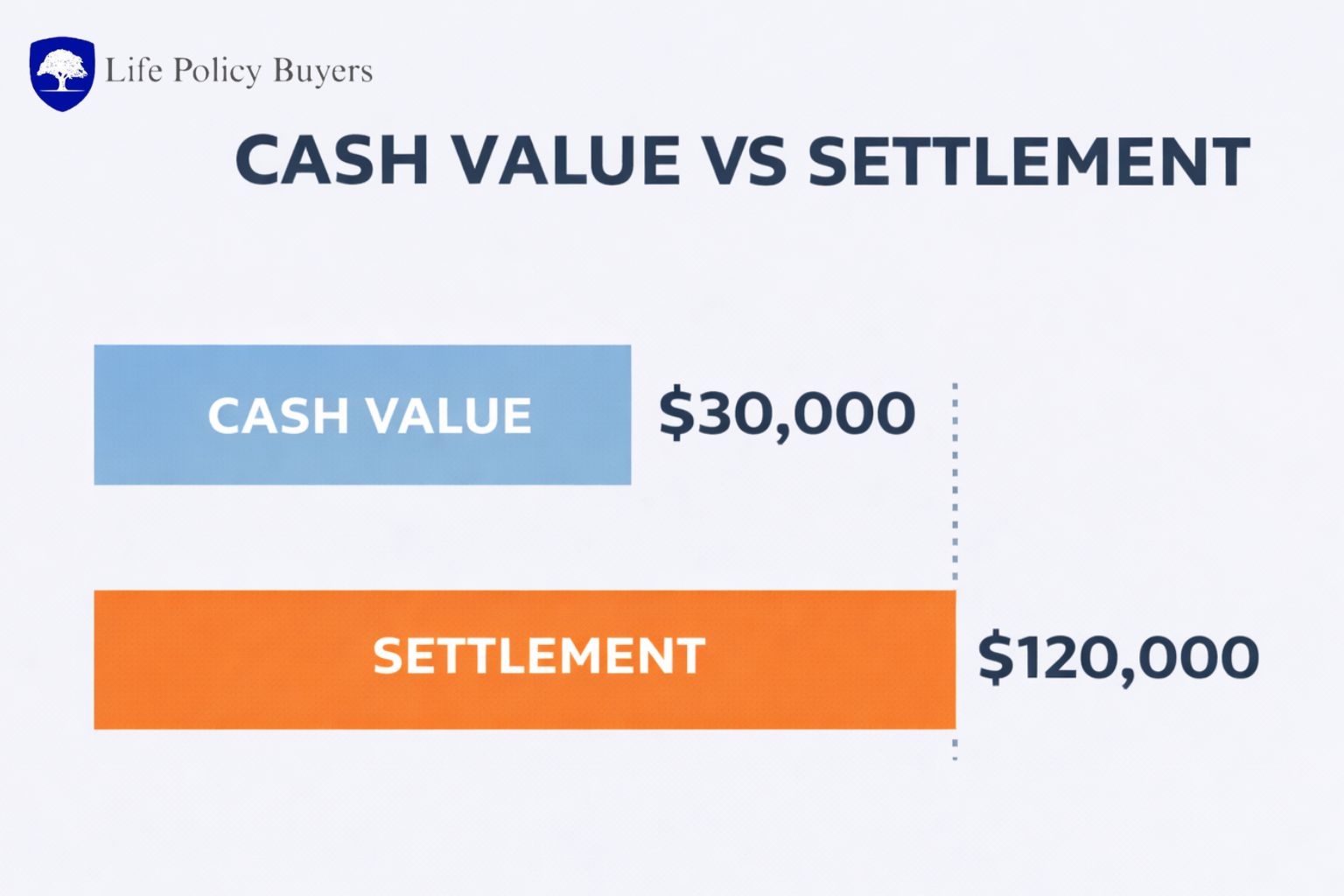
In a policy payout comparison, life settlements often come out far ahead. A direct surrender might return a fraction of what your policy is worth. A life settlement, on the other hand, may offer several times that amount because a buyer is willing to pay for the future death benefit.
This insurance cash offer through the secondary market is not for everyone, but it is worth knowing about before you make any decisions.
Know Your Options Before You Act
Cash value sounds straightforward until you start comparing what the numbers actually mean at payout time. The figure on your policy statement and the check you receive can look very different.
Before surrendering a policy or borrowing against it, take time to understand what each path gives you. The right choice depends on your situation, but you should always know the full picture first.
See the difference for yourself and find out what your policy could actually be worth.
